 |
 |
|
|
 |
 |

 |
 |
|
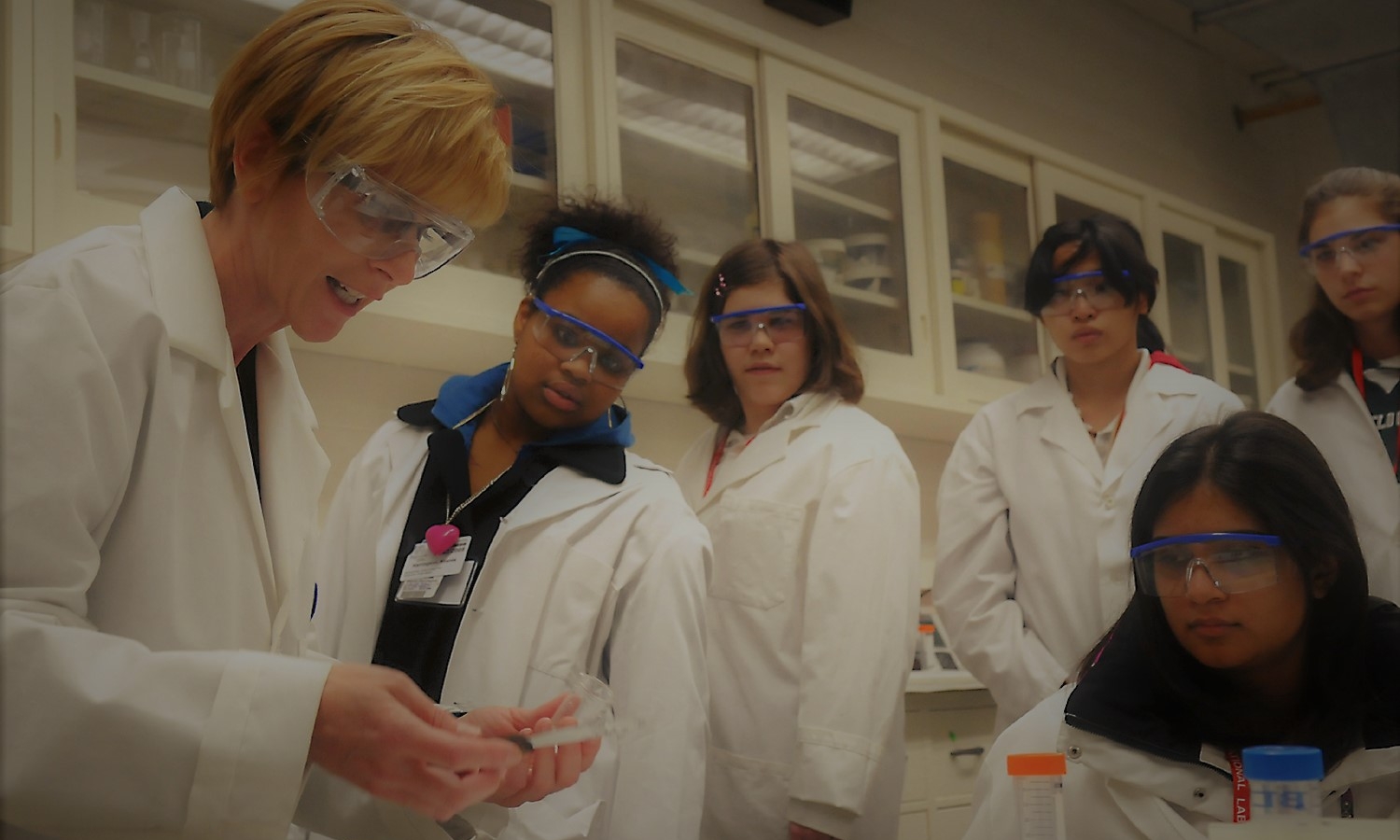
Don't expect to see
desks, chalkboards, or encyclopedias when you visit the
Challenger Learning Center of Kentucky. Instead, you
will use workstations to do experiments, computers to
do research, be an astronaut in the space station, be a
technician in mission control, communicate with your
teammates using a headset, and use video panels to
monitor your classmate's activities while they
work up in space. Sound like fun? You bet it
is! |
 |
 |
 |

Challenger Center Live Interactive Webcast - Water on the Moon and the LCROSS Lunar Impactor Mission
24 Feb 2010
February 24, 2010 - Alexandria, VA - Challenger Center for Space Science Education hosts a live interactive webcast for teachers and students on Wednesday, March 10th at 1:00pm ET with Brian Day, NASA Education and Public Outreach manager. In this presentation, we will look at how our new generation of robotic probes has discovered water on the Moon and its importance to our exploration of the solar system. We will concentrate on the recent LCROSS lunar impactor mission which excavated one of the permanently-shadowed craters at the Moon's South Pole. We will also take a brief look ahead to one of NASA's next missions to the Moon, the Lunar Atmosphere and Dust Environment Explorer scheduled for launch in late 2012. The webcast is free and open to the public. Visit http://webcasts.challenger.org. Forty years ago, the Apollo missions were helping us to develop an understanding of our nearest neighbor in space, the Moon. In recent years, a series of robotic lunar missions has provided us with new and exciting views of the Moon. The stories these recent missions are telling us reveal a Moon that is far different from what we thought we knew from the Apollo era. Most excitingly, we now know that the Moon has water. Much of this is in the form of ice deposits in permanently-shadowed craters at the Moon's poles. These mysterious dark regions are the coldest places yet measured anywhere in the solar system. Brian Day works at NASA's Ames Research Center leading development of education and public outreach (E/PO) programs for the Lunar Atmosphere and Dust Environment Explorer (LADEE) mission to the Moon. From 2007-2010 he served as the E/PO Lead for NASA's LCROSS lunar impactor mission which discovered deposits of water ice at the Moon's South Pole. Brian has also participated in various NASA Mars Analog Field Studies in extreme environments here on Earth. In 2007, Brian flew on the Aurigid-MAC mission to record fragments of comet Kiess entering Earth's upper atmosphere. Brian is also an avid solar eclipse chaser, having traveled around the world to see eclipses from such exotic locations as the wilds of Africa, the heights of the Andes, the jungles of Central America, the Outback of Australia, the frozen wastes of Northern Mongolia, and the base of the Great Wall in China. Brian has a Masters Degree in Astronomy from the University of Western Sydney, a Bachelors Degree in Psychology from the University of California Los Angeles, and a Bachelors Degree in Information Systems Management from the University of San Francisco.
EDUCATOR ASTRONAUTS CONTINUE THE LEGACY OF CHRISTA McAULIFFE
18 Mar 2009
March 17, 2009
EDUCATOR ASTRONAUTS CONTINUE THE LEGACY OF CHRISTA McAULIFFE Alexandria, VA – “I touch the future; I teach” are the inspiring words often quoted by our nation’s first Teacher-in-Space, Christa McAuliffe. Challenger Center for Space Science Education is thrilled to see Christa’s dreams fulfilled by former science and math teachers Joe Acaba and Ricky Arnold who are now officially “Educator Astronauts” in orbit around the Earth and successfully docked to the International Space Station.
<< Previous 1 2 Next >> |
 |
 |
 |

Mars Invasion 2030 - From Coal Camp to Space Camp
19 Mar 2009
Letters from 4th Grade Students After Their Visit to "Mars Invasion 2030 - From Coal Camp To Space Camp."
Schools across Eastern Kentucky, Virginia and West Virginia were sponsored by the Coal Industry to visit the Challenger Learning Center of Kentucky and experience this program.
<< Previous 1 2 3 4 Next >> |
 |
 |
|
|
 |
|
 |
|